The Autorickshaws here in Hyderabad are bug like, bright yellow
and black and thanks to the cussedness and perspicacity of their
drivers -- when it comes to getting the most out of every
passenger (especially with no other dependable means of public
transport), downright infamous. In Delhi, they are a eco-friendly
green -- run as they do only on CNG -- and their drivers
are positively chatty, if in a so what "let's show this
tourist the ropes of the capital" way. And not exactly looking
at stringing you for a million bucks, either.
Must be the effect of working in the shadow of the metro, or
the fact that migrants and movers (most of the auto drivers are
from Bihar and U.P., the archetypal Bhhaiyas) aren't exactly
there in the same league with local hicks when it comes to driving
a hard bargain. Or, for all I know, considering the volumes of
Autorickshaw users in Delhi, they get enough bakras and fight shy
of tangling with a Ray Ban wearing south Indian looking fellow
speaking in unaccented Hindi.
#$#@&^
The Delhi Metro is surprisingly seductive and far more efficient
and user-friendly (with amazingly polite and courteous staff) than I
expected it to be. Cameras cannot be used on the platforms (I
did not know and was merrily clicking away in one of the entrance
tunnels, but all that an armed policeman -- security is tight but
more or less non-invasive -- did was to wave at me in a minor
reprimand, no tongue-lashing, no checking, etc.) but it would be
fun to do some slow shutter speed photography on one of those
"junction" platforms when the passengers are moving from one
train to another, or running up or down, indistinct motion blurs
of a city's constituents on the move.
Getting buffeted by the slipstreams of all the moving humanity
is of course part of being the city's.
Yes, I traveled quite a bit on the metro and would say that
its easy enough to use. Also, evidently it is okay to be confused
and unaware of which train you should catch to get to your
destination. A lot of passengers around me were in the same
predicament. But then, there are enough staff (and police) around
to point in the right direction, so one learns and catches yet
another metro train.
#$#@&^
Sadar Road -- which passed through what seems like a continuous
village of two and three storied, un-plastered brick houses ill
at ease with the cheek-by-jowl sprawl of being part of a
city -- was where my hotel was at. And since it was a budget
hotel (but surprisingly clean and comfortable) not that stand-out or
hat ke from the environs all
around, either.
All of which meant that I had the proverbial room with a
view -- of a two laned road (with one under repairs), vegetable and
fruit hawkers (most of them in the middle of that road, under the
shade of bright yellow and green polythenes) the "one old teak chair
and a mirror is all it takes to be a saloon" barber shops. So many
rickshaws and tongas too, itinerantly at work all through the
heat and dust, going and coming.
Then there were the Black Kites in the skies above; along with
swarms of pigeons flying in formation -- probably from one coop
to another. Surprisingly, I did not take any photographs, the
atmosphere of impersonal strangeness in the hotel room helped
along my procrastination and the angles I could mentally
compose did not seem wide and encompassing enough as that
of a narrative. And the heat and dust didn't help either.
#%$@&
I am artless, unsophisticated and very, very middle class. So
I have no compunctions about eating anywhere as long as the place
is clean and the food promises an adventure for the palate. My
lunch and dinner was right on Sadar Road in two hotels that were
more or less holes in the wall. The food was rustic, honest and
right in tune with the in-your-face character of Sadar Road
(okay, I know it leads to Paharganj which has a reputation for being
seedy, but I never ventured that side). Paranthas (and curd) for two
(A ate with me on the first day, after helping me move in and settle
down in the hotel) as brunch and then Paranthas for one as a late
lunch. The hotel was run by a Sikh who surprisingly welcomed us
with a very salesman like Namaste (totally A's doing and his
Delhiness, I said or did nothing much but pronounce Parantha
the right way). The other culinary adventure (again in Sadar Road)
was at another hole in the wall type of eatery where I had
Rajma Masala (surprisingly hot) that came with grated cheese and
Matar Paneer (served with a big blob of butter) and Rotis (small
and saucer sized and served right out of the Tandoor) at Rs. 2
each. Nice and filling and the bill wasn't even in three figures
which was a welcome salve to my middle class wallet.
And yes, I ate elsewhere too. Like near the metro stations. While
watching the rickshaws queue up in neat orderly rows. I ate food
that was as inexpensive as a rickshaw fare -- Chole Bhatureys and
Channa Kulchas -- and as simple and unpretentious.
BTW, no Delhi Belly to report.
Friday, October 21, 2011


Tuesday, October 18, 2011
A lust for life and close encounters with the beautiful wilds
Looking back, over the last three years, I have spent a lot
of time outdoors, and most of it is in the "wilds"
near my place, in what is more or less military / government
land that has been left on its own -- crisscrossed by grass-verged
dirt tracks and populated by quite a few trees (though none
are that old or that giant) and interspersed with rocky outcrops
and disused quarries.
And I have been spending a lot more time here than the usual
hour in the morning or hour in the evening in the last two months,
thanks to the fact that I have had plenty of time on my hands and
that the profusion of butterflies and birds that I have found here.
I have seen the most stunning of artists -- mother nature -- at
work here, seen the dusty expanses of sun-scorched grass turn
green and then burst into colour -- with a billion wildflowers --
blue, wine red, yellow, purple and so on. And I have felt like
going down on my knee, overwhelmed by the inherent mystique in
the fluidity with which mother nature transforms what was once
a barren, almost dead landscape into something that calls out
to the Van Gogh in me...
I have agonized over the choice -- on continuous forays into
these wilds, on continuous days -- if to stick to shooting the
landscapes on offer or be led on a dance shooting the birds and
the butterflies. And there have been days when I have kicked
myself for not having both of my lenses with me (while perched
high on the narrow saddle of the Schwinn -- which doesn't have
a carrier or allow for leisurely ATB kind of cycling -- lugging
much gear is a bit tough) or when I have had both with me, I have
agonized over whether to shoot the whole meadow or a close up of
a flower and so on and so forth...
It is another matter that I have already come to the conclusion
that photography cannot be mixed with anything else; even with a
leisurely cycle ride, especially when it is the photography
of birds and butterflies.
Being on the cycle (with the camera zipped up in a bag) means that
by the time I am ready to shoot, the bird has flied off or it means
that there is a limit to the amount of "on foot" chasing that's
possible behind a butterfly, while leaving the Schwinn unguarded.
Which means, I have spent a lot of time afoot in these wilds and
hopefully will spend some more time walking through them.
And while enjoying the feeling that the wilds are my own private
preserve, thrilling in knowing these open expanses first
hand, for having played amateur naturalist and rookie woodsman
and coming across tailor bird nests, conclaves of bee eaters,
shy peacocks and even shyer coucals, pairs of bulbuls, colonies
of weaver birds, trapezing chameleons...
How do I even begin to express the pricelessness -- of the wealth
of all these ramblings in the wilds? It certainly cannot be
measured in terms of the photographs I have taken; I sincerely
feel that peering through a zoom lens is no less "naturalist" and
fieldwork from an ornithologist / lepidopterist point of view
than it would have been if the peering had been through a pair of
binoculars...and the ego boost of a good / perfect capture -- of a
bird or a butterfly is at many times secondary to the joys of seeing
the bird or butterfly with an enraptured eye :-)
And yes, just when I start thinking that I have seen it all, I see
something totally new and wonderful, something that -- yet again --
thrills me with the joy of witnessing and understanding the magic in
the behaviour of yet another "wild" species while simultaneously
humbling me with its beauty and economy of being natural.
I forget I have a camera with me when I see multitudes of small
butterflies like the Anderson's Grass Yellow -- fluttering and
wheeling around, like so many children at play -- preparatory to
settling down to puddle. Or I forget that I am supposed to take
a picture, capture the minute when I see a pair of Pied Kingfishers
bobbing / balancing on a barbed wire (for some reasons these birds
always seem to fish in a pair) while -- with the accompaniment of
a twinkle in the eye -- shitting a pearly white; instead grinning
to myself...
And it still doesn't cease to wonder me when (after having observed
the same countless times) I see weaver birds in their bright yellow
plumage, at work weaving freshly fetched green grass into what is
already a project that is a month long...going on and on...with the
finickiness of the true artists, building masterpieces the same way
countless of their ilk have done before as directed by their genetic
code.
It is more or less the same feeling -- of wonder and awe -- with
which I watch a butterfly pirouette on a lantana flower, preparatory
to going for the nectar the way a kid would for the jam bottle;
somehow the butterfly's greed seems more worthy of respect,
more evolved!
I don't know how long these wilds will survive -- as with most
open spaces within or flanking a concrete jungle called the city
these face the depredations of man too. I found (on my return from
Varanasi) that many weaver bird nests have been knocked down
and in some cases those very branches on which the nests were
have been cut; God only knows why and by whom...and a large
residential colony is already coming up flanking the wilds --
but I do look forward to some more close encounters, some more
peaceful epiphanies like the one I had on this Sunday.
I was cycling through the wilds on the dirt track and I came
across three bee-eaters, their green plumage iridescently
dazzling lying right on the track, beaks and beady red eyes
looking skywards, wings stretched out, something I have never
seen any bird do. Maybe they were sunbathing, or they were
praying.
Whatever they were doing, I did go down on my knee yet again.
And the photographs that resulted were but a bonus.
of time outdoors, and most of it is in the "wilds"
near my place, in what is more or less military / government
land that has been left on its own -- crisscrossed by grass-verged
dirt tracks and populated by quite a few trees (though none
are that old or that giant) and interspersed with rocky outcrops
and disused quarries.
And I have been spending a lot more time here than the usual
hour in the morning or hour in the evening in the last two months,
thanks to the fact that I have had plenty of time on my hands and
that the profusion of butterflies and birds that I have found here.
I have seen the most stunning of artists -- mother nature -- at
work here, seen the dusty expanses of sun-scorched grass turn
green and then burst into colour -- with a billion wildflowers --
blue, wine red, yellow, purple and so on. And I have felt like
going down on my knee, overwhelmed by the inherent mystique in
the fluidity with which mother nature transforms what was once
a barren, almost dead landscape into something that calls out
to the Van Gogh in me...
I have agonized over the choice -- on continuous forays into
these wilds, on continuous days -- if to stick to shooting the
landscapes on offer or be led on a dance shooting the birds and
the butterflies. And there have been days when I have kicked
myself for not having both of my lenses with me (while perched
high on the narrow saddle of the Schwinn -- which doesn't have
a carrier or allow for leisurely ATB kind of cycling -- lugging
much gear is a bit tough) or when I have had both with me, I have
agonized over whether to shoot the whole meadow or a close up of
a flower and so on and so forth...
It is another matter that I have already come to the conclusion
that photography cannot be mixed with anything else; even with a
leisurely cycle ride, especially when it is the photography
of birds and butterflies.
Being on the cycle (with the camera zipped up in a bag) means that
by the time I am ready to shoot, the bird has flied off or it means
that there is a limit to the amount of "on foot" chasing that's
possible behind a butterfly, while leaving the Schwinn unguarded.
Which means, I have spent a lot of time afoot in these wilds and
hopefully will spend some more time walking through them.
And while enjoying the feeling that the wilds are my own private
preserve, thrilling in knowing these open expanses first
hand, for having played amateur naturalist and rookie woodsman
and coming across tailor bird nests, conclaves of bee eaters,
shy peacocks and even shyer coucals, pairs of bulbuls, colonies
of weaver birds, trapezing chameleons...
How do I even begin to express the pricelessness -- of the wealth
of all these ramblings in the wilds? It certainly cannot be
measured in terms of the photographs I have taken; I sincerely
feel that peering through a zoom lens is no less "naturalist" and
fieldwork from an ornithologist / lepidopterist point of view
than it would have been if the peering had been through a pair of
binoculars...and the ego boost of a good / perfect capture -- of a
bird or a butterfly is at many times secondary to the joys of seeing
the bird or butterfly with an enraptured eye :-)
And yes, just when I start thinking that I have seen it all, I see
something totally new and wonderful, something that -- yet again --
thrills me with the joy of witnessing and understanding the magic in
the behaviour of yet another "wild" species while simultaneously
humbling me with its beauty and economy of being natural.
I forget I have a camera with me when I see multitudes of small
butterflies like the Anderson's Grass Yellow -- fluttering and
wheeling around, like so many children at play -- preparatory to
settling down to puddle. Or I forget that I am supposed to take
a picture, capture the minute when I see a pair of Pied Kingfishers
bobbing / balancing on a barbed wire (for some reasons these birds
always seem to fish in a pair) while -- with the accompaniment of
a twinkle in the eye -- shitting a pearly white; instead grinning
to myself...
And it still doesn't cease to wonder me when (after having observed
the same countless times) I see weaver birds in their bright yellow
plumage, at work weaving freshly fetched green grass into what is
already a project that is a month long...going on and on...with the
finickiness of the true artists, building masterpieces the same way
countless of their ilk have done before as directed by their genetic
code.
It is more or less the same feeling -- of wonder and awe -- with
which I watch a butterfly pirouette on a lantana flower, preparatory
to going for the nectar the way a kid would for the jam bottle;
somehow the butterfly's greed seems more worthy of respect,
more evolved!
I don't know how long these wilds will survive -- as with most
open spaces within or flanking a concrete jungle called the city
these face the depredations of man too. I found (on my return from
Varanasi) that many weaver bird nests have been knocked down
and in some cases those very branches on which the nests were
have been cut; God only knows why and by whom...and a large
residential colony is already coming up flanking the wilds --
but I do look forward to some more close encounters, some more
peaceful epiphanies like the one I had on this Sunday.
I was cycling through the wilds on the dirt track and I came
across three bee-eaters, their green plumage iridescently
dazzling lying right on the track, beaks and beady red eyes
looking skywards, wings stretched out, something I have never
seen any bird do. Maybe they were sunbathing, or they were
praying.
Whatever they were doing, I did go down on my knee yet again.
And the photographs that resulted were but a bonus.
A tribute to Jagjit Singh, the master of melancholy
On October 10th, while I was at Varanasi (and dealing with the
melancholy of my moods -- I have always associated Varanasi with
the cremation ghats and the Kasidaasins -- and the cacophonies
of the city) Ghazal Maestro Jagjit Singh passed away after a
protracted illness.
He was 70, but like most singers (and poets, painters and
artists) he will never have an age, never die for those who
have known and experienced the spellbinding depth of his voice.
I am not a music aficionado, nor can I claim to be any kind of a
connoisseur -- of the fascinating world of "old Hindi" -- of quiz
details like who wrote the lyrics of which song, who composed the
music and who were the lead pair and so on.
Heck, I am one of those rare ignoramuses who cannot decide for
sure if a particular song has been sung by Rafi or Mukesh. And at
the very outset, I need to make a clean breast of the fact that I
know zilch about the intricacies of music, I cannot differentiate
between a khayal and a thumri or whatever...
But -- though I am a layman and have absolutely no "ear for
music" -- for as long as I remember, I have been singing old
hindi songs to myself and since most of these songs used to be
slow, sad, melancholy numbers in which the song is more or less
a lyric accompanied by music, in the repeated singing to myself,
I have ingrained those cadences and rhythms...and also burnt
those lines...on my being.
You could also say that somewhere in the singing of those songs
is when I developed the "ambition" of becoming a shayar / kavi /
poet and long before I really had to deal with any loss, I
probably realized (and made peace with the realization) that
immaterial of how true the lie called "happiness" is, life's
underlying truth is that it is melancholy, and dark and
layered with pathos, more or less as expressed in the lines
राही मनवा दुःख की चिंता क्यों सताती है
दुःख तो अपना साथी है
सुख है एक छाँव, ढलती आती जाती है
दुःख तो अपना साथी है
(from the film Dosti)
And yes, (as I keep telling everyone) somewhere along the same
time I realised the depth of meaning (three layers of
imagination, location, analogy, metaphor, whatever) in the
lines
कहीं दूर जब दिन ढल जाये
सांझ की दुल्हन बदन चुराए, चुप के से आये
and have always wanted to write lines that are as vivid, as
imaginative, as powerful. And yes, for me Hindi will always be
the the language of gravitas, meant for writing down and
chronicling the occasional untranslatable line that is truest
the way it comes and not for the frivolity of communicating
banalities like
फ्रेश फ्रूट जूस पार्लर
So maybe immaterial of all my known and unknown shortcomings,
I am qualified to write about Jagjit Singh, considering that
most of his songs had an unsurpassable element of gravitas
and melancholy, if not downright gut-wrenching sadness and I
have connected to them, heard them on a radio, a cassette player,
etc.; heard them sung by friends and sang them to friends while
high on rum and coke in a bonding that was in all probability
more about teenage angst than it was about the rum or the song
itself. And yes, most of those lines are burnt in my being, the
same way lines of poetry are.
So they still reverberate in me, even these days when I don't
listen to any music thanks to my bum ears.
So they still reverberate in me, and in fact I can creditably
sing some of them, closing my eyes and going along with the
flow of blessed memory, of remembered song.
Like, for instance this song that a friend (here in Hyderabad)
used to repeatedly sing -- at cafes, in the college parking
lot, at his place ostensibly for combined studies (in the balcony
while sharing a smoke) up at 2.00 in the night, and at all
those Rum Coke sessions.
प्यार का पहला ख़त लिखने में वक़्त तो लगता है
नयी परिंदों को उड़ने में वक़्त तो लगता है
Need I mention that those were the days when my friend was
going through a phase of "should I propose?", "dare I propose?",
"what if she rejects me?" and all those questions that run pell mell
through a young man wooing a young woman?
Or, the exquisitely hummable, oh-so-simple, right from the heart
echoing call of
होंठों से छु लो तुम
मेरा गीत अमर कर दो
बन जाओ मीत मेरे
मेरा प्रीत अमर कर दो
that I used to sing along with the cassette player and while
serenading my own loneliness in buses (and the occasional Auto)
while still into my second year in Hyderabad. Did I mention I
was lonely? Oh yes, its confession time, I used to keep a diary
those days and almost every week used to start with the entry --
"Need to decide what to do in life and need to get a girlfriend
soon"...So maybe, that song was Jagjit Singh singing to my elusive
girlfriend, or he and I singing together, or me singing it to
myself, while Jagjit Singh would lip synch to a spell bound
audience.
There were other Jagjit Singh songs too -- that I listened
to in rapt attention (and sang to myself) as I would beg borrow
and steal any Jagjit Singh (and Yesudas and other Ghazal / Old
Hindi) cassettes that I could and since I never got around to
getting hooked to "pop music" (maybe because I couldn't get the
lyrics over all that high frequency "music") and just had
three other cassettes -- Yanni, Khaled and Eric Clapton to
listen to, I would get bored of the "change" pretty soon and go
back to Jagjit Singh.
And thus, I got to hear the wonderfully knowing
तुम इतना जो मुस्कुरा रहे हो
क्या गम है जिसको छुपा रहे हो
The intensely romantic
तुम को देखा तो ये ख्याल आया
जिंदगी धुप तुम घना साया
and so many others, that though I can't recollect them now -- are
as familiar and permanent as the memories of old friends.
But the one song that made Jagjit Singh what he is to me is the
one where he is less of melody, technique and nuance but completely
and absolutely a requiem of grief, a gut-wrenching voice calling
out in the totality of the pain of loss. The song (if I remember
right) he sang after the death of his only son --
दर्द से मेरा दामन भर दे या अल्लाह
फिर चाहे दीवाना कर दे या अल्लाह
In all probability someone more knowledgeable or well read than me
had told me this and maybe I read more into this song because I
know (or think I know) what Jagjit Singh means by "dard" and
"deewana" in the song...I could be wrong about all that...
but somehow this has to be the ultimate song when it comes to loss
and grief for me.
The ultimate.
You will be the ultimate ever for me Jagjit Singh Ji, the
ultimate, and forever alive, because I don't even need to listen
to your songs to connect with the blessed oeuvre that you have
voiced for us, left behind for us...
For your ultimate songs reverberate in me, resonate in me, reside in
me.
As found poems.
And memories where I can find more poetry.
Thank you.
melancholy of my moods -- I have always associated Varanasi with
the cremation ghats and the Kasidaasins -- and the cacophonies
of the city) Ghazal Maestro Jagjit Singh passed away after a
protracted illness.
He was 70, but like most singers (and poets, painters and
artists) he will never have an age, never die for those who
have known and experienced the spellbinding depth of his voice.
I am not a music aficionado, nor can I claim to be any kind of a
connoisseur -- of the fascinating world of "old Hindi" -- of quiz
details like who wrote the lyrics of which song, who composed the
music and who were the lead pair and so on.
Heck, I am one of those rare ignoramuses who cannot decide for
sure if a particular song has been sung by Rafi or Mukesh. And at
the very outset, I need to make a clean breast of the fact that I
know zilch about the intricacies of music, I cannot differentiate
between a khayal and a thumri or whatever...
But -- though I am a layman and have absolutely no "ear for
music" -- for as long as I remember, I have been singing old
hindi songs to myself and since most of these songs used to be
slow, sad, melancholy numbers in which the song is more or less
a lyric accompanied by music, in the repeated singing to myself,
I have ingrained those cadences and rhythms...and also burnt
those lines...on my being.
You could also say that somewhere in the singing of those songs
is when I developed the "ambition" of becoming a shayar / kavi /
poet and long before I really had to deal with any loss, I
probably realized (and made peace with the realization) that
immaterial of how true the lie called "happiness" is, life's
underlying truth is that it is melancholy, and dark and
layered with pathos, more or less as expressed in the lines
राही मनवा दुःख की चिंता क्यों सताती है
दुःख तो अपना साथी है
सुख है एक छाँव, ढलती आती जाती है
दुःख तो अपना साथी है
(from the film Dosti)
And yes, (as I keep telling everyone) somewhere along the same
time I realised the depth of meaning (three layers of
imagination, location, analogy, metaphor, whatever) in the
lines
कहीं दूर जब दिन ढल जाये
सांझ की दुल्हन बदन चुराए, चुप के से आये
and have always wanted to write lines that are as vivid, as
imaginative, as powerful. And yes, for me Hindi will always be
the the language of gravitas, meant for writing down and
chronicling the occasional untranslatable line that is truest
the way it comes and not for the frivolity of communicating
banalities like
फ्रेश फ्रूट जूस पार्लर
So maybe immaterial of all my known and unknown shortcomings,
I am qualified to write about Jagjit Singh, considering that
most of his songs had an unsurpassable element of gravitas
and melancholy, if not downright gut-wrenching sadness and I
have connected to them, heard them on a radio, a cassette player,
etc.; heard them sung by friends and sang them to friends while
high on rum and coke in a bonding that was in all probability
more about teenage angst than it was about the rum or the song
itself. And yes, most of those lines are burnt in my being, the
same way lines of poetry are.
So they still reverberate in me, even these days when I don't
listen to any music thanks to my bum ears.
So they still reverberate in me, and in fact I can creditably
sing some of them, closing my eyes and going along with the
flow of blessed memory, of remembered song.
Like, for instance this song that a friend (here in Hyderabad)
used to repeatedly sing -- at cafes, in the college parking
lot, at his place ostensibly for combined studies (in the balcony
while sharing a smoke) up at 2.00 in the night, and at all
those Rum Coke sessions.
प्यार का पहला ख़त लिखने में वक़्त तो लगता है
नयी परिंदों को उड़ने में वक़्त तो लगता है
Need I mention that those were the days when my friend was
going through a phase of "should I propose?", "dare I propose?",
"what if she rejects me?" and all those questions that run pell mell
through a young man wooing a young woman?
Or, the exquisitely hummable, oh-so-simple, right from the heart
echoing call of
होंठों से छु लो तुम
मेरा गीत अमर कर दो
बन जाओ मीत मेरे
मेरा प्रीत अमर कर दो
that I used to sing along with the cassette player and while
serenading my own loneliness in buses (and the occasional Auto)
while still into my second year in Hyderabad. Did I mention I
was lonely? Oh yes, its confession time, I used to keep a diary
those days and almost every week used to start with the entry --
"Need to decide what to do in life and need to get a girlfriend
soon"...So maybe, that song was Jagjit Singh singing to my elusive
girlfriend, or he and I singing together, or me singing it to
myself, while Jagjit Singh would lip synch to a spell bound
audience.
There were other Jagjit Singh songs too -- that I listened
to in rapt attention (and sang to myself) as I would beg borrow
and steal any Jagjit Singh (and Yesudas and other Ghazal / Old
Hindi) cassettes that I could and since I never got around to
getting hooked to "pop music" (maybe because I couldn't get the
lyrics over all that high frequency "music") and just had
three other cassettes -- Yanni, Khaled and Eric Clapton to
listen to, I would get bored of the "change" pretty soon and go
back to Jagjit Singh.
And thus, I got to hear the wonderfully knowing
तुम इतना जो मुस्कुरा रहे हो
क्या गम है जिसको छुपा रहे हो
The intensely romantic
तुम को देखा तो ये ख्याल आया
जिंदगी धुप तुम घना साया
and so many others, that though I can't recollect them now -- are
as familiar and permanent as the memories of old friends.
But the one song that made Jagjit Singh what he is to me is the
one where he is less of melody, technique and nuance but completely
and absolutely a requiem of grief, a gut-wrenching voice calling
out in the totality of the pain of loss. The song (if I remember
right) he sang after the death of his only son --
दर्द से मेरा दामन भर दे या अल्लाह
फिर चाहे दीवाना कर दे या अल्लाह
In all probability someone more knowledgeable or well read than me
had told me this and maybe I read more into this song because I
know (or think I know) what Jagjit Singh means by "dard" and
"deewana" in the song...I could be wrong about all that...
but somehow this has to be the ultimate song when it comes to loss
and grief for me.
The ultimate.
You will be the ultimate ever for me Jagjit Singh Ji, the
ultimate, and forever alive, because I don't even need to listen
to your songs to connect with the blessed oeuvre that you have
voiced for us, left behind for us...
For your ultimate songs reverberate in me, resonate in me, reside in
me.
As found poems.
And memories where I can find more poetry.
Thank you.
Monday, October 17, 2011
Come Again (Shit, What Did I Miss) ?
You know how it is with the Phantom -- that inimitable
super hero who wears his underwear over his trunks (or
tights), is married to the gorgeous Diana Palmer and has
a pet wolf (no, its not a dog) called Devil and a white
stallion called Hero.
You know how it is even with this superhero, the ghost who
walks, the lord of the Bandar and the protector of peace in
the jungle; however loath he be, even he has to go to the city,
from time to time.
And go he does, by simply becoming Mr. Walker, by donning a hat,
a coat and a pair of dark glasses.
I am no ghost who walks (with a loyal retinue of pygmies)
ruling the dark woods, but when it comes to interacting with
the dynamic character and the "news and events" section
of my corporate website called the city my trips are as
rare as the Phantom's.
And no, I am not saying my trips to the city -- I stay in a
part of Secunderabad that is still, out and out "suburbia" -- are
limited because of my current fascination with the photography
of birds, butterflies and wide open spaces. Or because (for more
or less, the last two months) I don't sally forth into it to earn
a living.
Nor because I am a recluse living in a tree house.
It's just so that when it comes to engaging with the
amplification of the city's vibrancy and cultural spirit -- be
it theatre, dance, a book release, an art exhibition, or any
other "happening" or it's collective pulse / voice -- a private
party, an evening at a pub, and so on; when it comes to engaging
with the auditory element in all of these, when it comes to
hearing to the city, what registers on me is cacophony and chaos.
Because, my ears (hearing aids, in fact) can't do a lot of things
yours can. Because, though they are sophisticated and sexy (who
says size matters -- when it comes to hearing aids) when new and
used in controlled environments (like the audiologist's
sound-proofed cabin or programming / audiology) lab,
my hearing aids just suck --
http://www.wired.com/culture/culturereviews/magazine/16-02/su_hearing_aids.
And, though I was told (I have been using these for more than a
year now)otherwise, my hearing aids seem to be incapable of
dealing with the loudness of voices, like that arising
out of recruitment --
http://www.hearinglosshelp.com/articles/recruitment.htm
And since every environment is different, with its own ambient
and unique sound fingerprint and since every new voice is
different, there is no way for me to know how much of my next
interaction with the "city" will be chaos and cacophony.
And how much of it will be a blessed voice that makes meaning.
But (though I am not into wearing underwear on top or flying
around in a cape, or interested in comparisons with super
heroes and their ilk) while I am not chicken, I do wish that
there are more places in the city where I can go and luxuriate
without getting assailed through the ears.
I also wish there were more spaces where I could be like a
gunman in an alien saloon -- in a wild west setting -- who
can sit with his back to a wall and watch the batwing doors
and not bother about anything because he can deal with
whatever he can see coming at him.
But then, if wishes could be horses, I would carry an
audiologist's sound-proof cabin with me everywhere. Or
everyone would carry a notepad (and not be stressed)
to write notes for me.
P.S. -- Written largely for no reason but for still thinking
in terms of "shit, what all did I miss?" after having
had some fairly cacophonic interactions with the "city"
on my 10 days of tripping. Two Cafe Coffee Day outlets
(and one upscale bar), metro and railway stations in Delhi,
the market, Vishwanath Galli and crowded bathing Ghats and a
boat on the Ganga (with a boatman called Rajan whose voice was
as high pitched as a child's; who typed the name of a
Ghat -- Vacchadraj -- on his cellphone for me).
super hero who wears his underwear over his trunks (or
tights), is married to the gorgeous Diana Palmer and has
a pet wolf (no, its not a dog) called Devil and a white
stallion called Hero.
You know how it is even with this superhero, the ghost who
walks, the lord of the Bandar and the protector of peace in
the jungle; however loath he be, even he has to go to the city,
from time to time.
And go he does, by simply becoming Mr. Walker, by donning a hat,
a coat and a pair of dark glasses.
I am no ghost who walks (with a loyal retinue of pygmies)
ruling the dark woods, but when it comes to interacting with
the dynamic character and the "news and events" section
of my corporate website called the city my trips are as
rare as the Phantom's.
And no, I am not saying my trips to the city -- I stay in a
part of Secunderabad that is still, out and out "suburbia" -- are
limited because of my current fascination with the photography
of birds, butterflies and wide open spaces. Or because (for more
or less, the last two months) I don't sally forth into it to earn
a living.
Nor because I am a recluse living in a tree house.
It's just so that when it comes to engaging with the
amplification of the city's vibrancy and cultural spirit -- be
it theatre, dance, a book release, an art exhibition, or any
other "happening" or it's collective pulse / voice -- a private
party, an evening at a pub, and so on; when it comes to engaging
with the auditory element in all of these, when it comes to
hearing to the city, what registers on me is cacophony and chaos.
Because, my ears (hearing aids, in fact) can't do a lot of things
yours can. Because, though they are sophisticated and sexy (who
says size matters -- when it comes to hearing aids) when new and
used in controlled environments (like the audiologist's
sound-proofed cabin or programming / audiology) lab,
my hearing aids just suck --
http://www.wired.com/culture/culturereviews/magazine/16-02/su_hearing_aids.
And, though I was told (I have been using these for more than a
year now)otherwise, my hearing aids seem to be incapable of
dealing with the loudness of voices, like that arising
out of recruitment --
http://www.hearinglosshelp.com/articles/recruitment.htm
And since every environment is different, with its own ambient
and unique sound fingerprint and since every new voice is
different, there is no way for me to know how much of my next
interaction with the "city" will be chaos and cacophony.
And how much of it will be a blessed voice that makes meaning.
But (though I am not into wearing underwear on top or flying
around in a cape, or interested in comparisons with super
heroes and their ilk) while I am not chicken, I do wish that
there are more places in the city where I can go and luxuriate
without getting assailed through the ears.
I also wish there were more spaces where I could be like a
gunman in an alien saloon -- in a wild west setting -- who
can sit with his back to a wall and watch the batwing doors
and not bother about anything because he can deal with
whatever he can see coming at him.
But then, if wishes could be horses, I would carry an
audiologist's sound-proof cabin with me everywhere. Or
everyone would carry a notepad (and not be stressed)
to write notes for me.
P.S. -- Written largely for no reason but for still thinking
in terms of "shit, what all did I miss?" after having
had some fairly cacophonic interactions with the "city"
on my 10 days of tripping. Two Cafe Coffee Day outlets
(and one upscale bar), metro and railway stations in Delhi,
the market, Vishwanath Galli and crowded bathing Ghats and a
boat on the Ganga (with a boatman called Rajan whose voice was
as high pitched as a child's; who typed the name of a
Ghat -- Vacchadraj -- on his cellphone for me).
Sunday, October 16, 2011
Another Pessoan page
"Literature -- which is art married to thought, and realization
untainted by reality -- seems to me the end towards which all
human effort would have to strive, if it were truly human and
not just a welling up of our animal self. To express something
is to conserve its virtue and take away its terror. Fields are
greener in their description than in their actual greenness.
Flowers, if described with phrases that define them in the
air of the imagination, will have colours with a durability
not found in cellular life.
What moves lives. What is said endures. There's nothing in
life that's less real for having been well described.
Small-minded critics point out that such-and-such poem,
with its protracted cadences, in the end says merely that
it's a nice day. But to say it's a nice day is difficult,
and the nice day itself passes on. It's upto us to conserve
the nice day in a wordy, florid memory, sprinkling new
flowers and new stars over the fields and skies of the
empty, fleeting outer world.
Everything is what we are, and everything will be, for
those who come after us in the diversity of time, what
we will have intensely imagined -- what we, that is, by
embodying our imagination, will have actually been. The
grand, tarnished panorama of History amounts, as I see
it, to a flow of interpretations, a confused consensus
of unreliable eyewitness accounts. The novelist is all
of us, and we narrate whenever we see, because seeing is
complex like everything.
Right now I have so many fundamental thoughts, so many
truly metaphysical things to say that I suddenly feel
tired, and I've decided to write no more, to think no
more. I'll let the fever of saying put me to sleep
instead, and with closed eyes I'll stroke, as if petting
a cat, all that I might have said.
Chapter (?) 27, page 30, The Book of Disquiet by
Fernando Pessoa (Tr. Richard Zenith)
untainted by reality -- seems to me the end towards which all
human effort would have to strive, if it were truly human and
not just a welling up of our animal self. To express something
is to conserve its virtue and take away its terror. Fields are
greener in their description than in their actual greenness.
Flowers, if described with phrases that define them in the
air of the imagination, will have colours with a durability
not found in cellular life.
What moves lives. What is said endures. There's nothing in
life that's less real for having been well described.
Small-minded critics point out that such-and-such poem,
with its protracted cadences, in the end says merely that
it's a nice day. But to say it's a nice day is difficult,
and the nice day itself passes on. It's upto us to conserve
the nice day in a wordy, florid memory, sprinkling new
flowers and new stars over the fields and skies of the
empty, fleeting outer world.
Everything is what we are, and everything will be, for
those who come after us in the diversity of time, what
we will have intensely imagined -- what we, that is, by
embodying our imagination, will have actually been. The
grand, tarnished panorama of History amounts, as I see
it, to a flow of interpretations, a confused consensus
of unreliable eyewitness accounts. The novelist is all
of us, and we narrate whenever we see, because seeing is
complex like everything.
Right now I have so many fundamental thoughts, so many
truly metaphysical things to say that I suddenly feel
tired, and I've decided to write no more, to think no
more. I'll let the fever of saying put me to sleep
instead, and with closed eyes I'll stroke, as if petting
a cat, all that I might have said.
Chapter (?) 27, page 30, The Book of Disquiet by
Fernando Pessoa (Tr. Richard Zenith)
Subscribe to:
Posts (Atom)
About Me
- Anand Vishwanadha
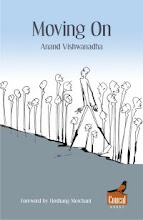
- Hello and welcome! I am someone who is passionate about poetry and motorcycling and I read and write a lot (writing, for me has been a calling, a release and a career). My debut collection of English poems, "Moving On" was published by Coucal Books in December 2009. It can be ordered here My second poetry collection, Ink Dries can be ordered here Leave a comment or do write to me at ahighwayman(at)gmail(dot)com.
Take A Look See
-
-
-
Meet Annie the author10 years ago
-
Poems online5 years ago
-
-
-
-
When to have THE TALK with the kids11 months ago
-
An Analysis of Trump9 years ago
-
-
-
Where journeys end9 months ago
-
-
-
-
-
Indian in Space: A phony Socialist trick14 years ago
-
Recipe – Easy Apple Halwa5 years ago


