"Literature -- which is art married to thought, and realization
untainted by reality -- seems to me the end towards which all
human effort would have to strive, if it were truly human and
not just a welling up of our animal self. To express something
is to conserve its virtue and take away its terror. Fields are
greener in their description than in their actual greenness.
Flowers, if described with phrases that define them in the
air of the imagination, will have colours with a durability
not found in cellular life.
What moves lives. What is said endures. There's nothing in
life that's less real for having been well described.
Small-minded critics point out that such-and-such poem,
with its protracted cadences, in the end says merely that
it's a nice day. But to say it's a nice day is difficult,
and the nice day itself passes on. It's upto us to conserve
the nice day in a wordy, florid memory, sprinkling new
flowers and new stars over the fields and skies of the
empty, fleeting outer world.
Everything is what we are, and everything will be, for
those who come after us in the diversity of time, what
we will have intensely imagined -- what we, that is, by
embodying our imagination, will have actually been. The
grand, tarnished panorama of History amounts, as I see
it, to a flow of interpretations, a confused consensus
of unreliable eyewitness accounts. The novelist is all
of us, and we narrate whenever we see, because seeing is
complex like everything.
Right now I have so many fundamental thoughts, so many
truly metaphysical things to say that I suddenly feel
tired, and I've decided to write no more, to think no
more. I'll let the fever of saying put me to sleep
instead, and with closed eyes I'll stroke, as if petting
a cat, all that I might have said.
Chapter (?) 27, page 30, The Book of Disquiet by
Fernando Pessoa (Tr. Richard Zenith)
Showing posts with label Fernando Pessoa. Show all posts
Showing posts with label Fernando Pessoa. Show all posts
Sunday, October 16, 2011


Saturday, September 17, 2011
If Kafkaesque is, why can't Pessoan be?
I will be the first to admit that I am one of the least well-read poets
you will come across. And no, that doesn't refer to any genre
in particular; I am as bad about reading poetry as I am about
reading fiction. Maybe because I just don't have the time I
used to have. Or because when I have time, I would rather
write than read. Or this, and that. Ad infinitum.
But it wasn't always so. I still remember my days as a
struggling copywriter in a small, one bedroom flat (does
anyone make them still here in Hyderabad?) at a quaintly
named locality called Golkonda X Roads (near / in Gandhinagar
and nowhere near Golkonda fort) when my daily diet used
to be of books bought cheaply at Sunday Market (Abids) or
carefully (selected, weighed, half-read and then) bought at
Walden or (highly recommended and) lent by this or
that "intellectual" or "radical" friend.
For, I used to have quite a few of "intellectual" / "radical"
friends, mostly left-leaning and socialist / naxalite in
terms of ideology who used to frequent my place as a BYOB
destination for conversations dealing with anything and
everything under the sky and for sessions where rum-loosened
tongues would be raised in unrestrained singing. And while
they would bring down the roof with ballads like "Long March" and
poems by Sri Sri and other notables, I would pitch in with
soulful and sombre (or so I would like to believe) renditions
of "Dil hoon hoon kare..." and "Aa chal ke tujhe, main le
ke chaloon..."
Those were the days... when it was routine on my part to
finish a book a day. Or even two at times. And my reading
list was eclectic (as befitting a bright-MBA-turned-copywriter
who was willing to read any author at least once, and
picking up books at Rs.2 and Rs.3 each).
I confess to have continued reading the odd Nick Carter,
the little more occasional Harold Robbins, the frequent
Louis L'amour and a bit more frequenter Alistair Maclean -- in
keeping with my post-adolescent reading list (in addition to
all that a bright MBA would consider hot -- like Stephen Covey,
Jack Trout, etc.), but it was around this time that I read
voraciously of authors like Marquez, Naipaul, Krishnamurti (Jiddu),
Gibran (Khalil), Michener, Neruda, Raja Rao and others I sadly
don't remember.
And it was also around this time that I read Kafka for the
first time and probably had a brush with Pessoa too. I say
"probably" because while I continued to read Kafka off and on,
I don't remember having read anything by Fernando Pessoa in those
days or the days that followed (when I had the luxury of having
another well-read intellectual friend in my life -- one far more
prettier than the left-leaning radicals -- and was gifted both
amazing conversations and books), I somehow feel I
must have read him back then too.
Why? You may ask. Because on many days and most evenings,
especially those when there were no singing sessions, my setting
was spartan, bookish, labouriously slow (I used to maintain a diary
and also used to write poetry then) and Pessoan. When entire
days would go to recording the lengthy demise of a cigarette pack
or in putting down 8-10 lines onto a page in the form of a poem. Or
to sitting in a chair in the narrow balcony and observing the cows
and buffaloes in the sprawling khatal 5-6 floors below. Observing the
highlights -- being milked and washed down -- of a bovine life
comprising of the continual mooing for food and the mucking up
of respective pens / stakeouts.
Maybe most of those observings and most of the relative inertia
and ennui that I let brew in me -- in a one bedroom flat with
narrow windows to the world -- was because of my disconnect --
as a struggling copywriter -- with what was my immediate world
back then. Or maybe it was when I started developing a 'writer's
disquiet", but I somehow still feel I must have read a bit of
Pessoa those days. I mean, I am sure somewhere something Pessoan
must have contributed to making me "angsty".
Hell, I have nothing much to show in terms of writing from those
days, but (immaterial of whether I did read Pessoa or not) I do
consider those days as a formative phases in my life, when I probably
let my identity and location as a writer take root in me.
And in all probability, the credit for that could be a Pessoan
(or some other) page of writing with power (and brutal frankness)
as moving as that in the words below --
"I envy -- but I'm not sure that I envy -- those for whom a
biography can be written, or who could write their own. In these
random impressions, and with no desire to be other than random, I
indifferently narrate my factless autobiography, my lifeless
history. These are my Confessions, and if in them I say nothing,
it's because I have nothing to say.
What is there to confess that's worthwhile or useful? What has
happened to us has happened to everyone or only to us; if
to everyone, this it's no novelty, and if only to us, then
it won't be understood. If I write what I feel, it's to reduce
the fever of feeling. What I confess is unimportant, because
everything is unimportant. I make landscapes out of what I feel.
I make holidays out of my sensations. I can easily understand
women who embroider out of sorrow or who crochet because life
exists. My elderly aunt would play solitaire throughout the endless
evening. These confessions of what I feel are my solitaire. I don't
interrupt them like those who read cards to tell the future. I don't
probe them, because in solitaire the cards don't have any special
significance. I unwind myself like a multicoloured skein, or I make
string figures of myself, like those woven on spread fingers and
passed from child to child. I take care only that my thumb not miss
its loop. Then I turn over my hand and the figure changes. And I
start over.
To live is to crochet according to a pattern we were given. But
while doing it the mind is at liberty, and all enchanted princes can
stroll in their parks between one and another plunge of the hooked
ivory needle. Needlework of things...Intervals...Nothing...
Besides, what can I expect from myself? My sensations in all their
horrible acuity, and a profound awareness of feeling...A sharp mind
that only destroys me, and an unusual capacity for dreaming to keep
me entertained...A dead will and a reflection that cradles it, like
a living child...Yes, crochet... "
page 10-11, "The Book of Disquiet", Fernando Pessoa (translated
from the Portuguese by Richard Zenith).
Yes, I strongly recommend some Pessoan reading, or maybe again
I don't, this is deep and disturbingly "angsty" reading.
And yes, Pessoan certainly deserves to be a "word", I honestly don't
what it could "mean"; especially these days when every word has to
or is expected to have a literal meaning. Is there a singular meaning
for angst or disquiet?
you will come across. And no, that doesn't refer to any genre
in particular; I am as bad about reading poetry as I am about
reading fiction. Maybe because I just don't have the time I
used to have. Or because when I have time, I would rather
write than read. Or this, and that. Ad infinitum.
But it wasn't always so. I still remember my days as a
struggling copywriter in a small, one bedroom flat (does
anyone make them still here in Hyderabad?) at a quaintly
named locality called Golkonda X Roads (near / in Gandhinagar
and nowhere near Golkonda fort) when my daily diet used
to be of books bought cheaply at Sunday Market (Abids) or
carefully (selected, weighed, half-read and then) bought at
Walden or (highly recommended and) lent by this or
that "intellectual" or "radical" friend.
For, I used to have quite a few of "intellectual" / "radical"
friends, mostly left-leaning and socialist / naxalite in
terms of ideology who used to frequent my place as a BYOB
destination for conversations dealing with anything and
everything under the sky and for sessions where rum-loosened
tongues would be raised in unrestrained singing. And while
they would bring down the roof with ballads like "Long March" and
poems by Sri Sri and other notables, I would pitch in with
soulful and sombre (or so I would like to believe) renditions
of "Dil hoon hoon kare..." and "Aa chal ke tujhe, main le
ke chaloon..."
Those were the days... when it was routine on my part to
finish a book a day. Or even two at times. And my reading
list was eclectic (as befitting a bright-MBA-turned-copywriter
who was willing to read any author at least once, and
picking up books at Rs.2 and Rs.3 each).
I confess to have continued reading the odd Nick Carter,
the little more occasional Harold Robbins, the frequent
Louis L'amour and a bit more frequenter Alistair Maclean -- in
keeping with my post-adolescent reading list (in addition to
all that a bright MBA would consider hot -- like Stephen Covey,
Jack Trout, etc.), but it was around this time that I read
voraciously of authors like Marquez, Naipaul, Krishnamurti (Jiddu),
Gibran (Khalil), Michener, Neruda, Raja Rao and others I sadly
don't remember.
And it was also around this time that I read Kafka for the
first time and probably had a brush with Pessoa too. I say
"probably" because while I continued to read Kafka off and on,
I don't remember having read anything by Fernando Pessoa in those
days or the days that followed (when I had the luxury of having
another well-read intellectual friend in my life -- one far more
prettier than the left-leaning radicals -- and was gifted both
amazing conversations and books), I somehow feel I
must have read him back then too.
Why? You may ask. Because on many days and most evenings,
especially those when there were no singing sessions, my setting
was spartan, bookish, labouriously slow (I used to maintain a diary
and also used to write poetry then) and Pessoan. When entire
days would go to recording the lengthy demise of a cigarette pack
or in putting down 8-10 lines onto a page in the form of a poem. Or
to sitting in a chair in the narrow balcony and observing the cows
and buffaloes in the sprawling khatal 5-6 floors below. Observing the
highlights -- being milked and washed down -- of a bovine life
comprising of the continual mooing for food and the mucking up
of respective pens / stakeouts.
Maybe most of those observings and most of the relative inertia
and ennui that I let brew in me -- in a one bedroom flat with
narrow windows to the world -- was because of my disconnect --
as a struggling copywriter -- with what was my immediate world
back then. Or maybe it was when I started developing a 'writer's
disquiet", but I somehow still feel I must have read a bit of
Pessoa those days. I mean, I am sure somewhere something Pessoan
must have contributed to making me "angsty".
Hell, I have nothing much to show in terms of writing from those
days, but (immaterial of whether I did read Pessoa or not) I do
consider those days as a formative phases in my life, when I probably
let my identity and location as a writer take root in me.
And in all probability, the credit for that could be a Pessoan
(or some other) page of writing with power (and brutal frankness)
as moving as that in the words below --
"I envy -- but I'm not sure that I envy -- those for whom a
biography can be written, or who could write their own. In these
random impressions, and with no desire to be other than random, I
indifferently narrate my factless autobiography, my lifeless
history. These are my Confessions, and if in them I say nothing,
it's because I have nothing to say.
What is there to confess that's worthwhile or useful? What has
happened to us has happened to everyone or only to us; if
to everyone, this it's no novelty, and if only to us, then
it won't be understood. If I write what I feel, it's to reduce
the fever of feeling. What I confess is unimportant, because
everything is unimportant. I make landscapes out of what I feel.
I make holidays out of my sensations. I can easily understand
women who embroider out of sorrow or who crochet because life
exists. My elderly aunt would play solitaire throughout the endless
evening. These confessions of what I feel are my solitaire. I don't
interrupt them like those who read cards to tell the future. I don't
probe them, because in solitaire the cards don't have any special
significance. I unwind myself like a multicoloured skein, or I make
string figures of myself, like those woven on spread fingers and
passed from child to child. I take care only that my thumb not miss
its loop. Then I turn over my hand and the figure changes. And I
start over.
To live is to crochet according to a pattern we were given. But
while doing it the mind is at liberty, and all enchanted princes can
stroll in their parks between one and another plunge of the hooked
ivory needle. Needlework of things...Intervals...Nothing...
Besides, what can I expect from myself? My sensations in all their
horrible acuity, and a profound awareness of feeling...A sharp mind
that only destroys me, and an unusual capacity for dreaming to keep
me entertained...A dead will and a reflection that cradles it, like
a living child...Yes, crochet... "
page 10-11, "The Book of Disquiet", Fernando Pessoa (translated
from the Portuguese by Richard Zenith).
Yes, I strongly recommend some Pessoan reading, or maybe again
I don't, this is deep and disturbingly "angsty" reading.
And yes, Pessoan certainly deserves to be a "word", I honestly don't
what it could "mean"; especially these days when every word has to
or is expected to have a literal meaning. Is there a singular meaning
for angst or disquiet?
Saturday, March 5, 2011
The washerwoman beats the laundry
A lavadeira no tanque
Bate roupa em pedra bem.
Canta porque canta, e é triste
Porque canta porque existe;
Por isso é alegre também.
Ora se eu alguma vez
Pudesse fazer nos versos
O que a essa roupa ela fez,
Eu perderia talvez
Os meus destinos diversos.
Há uma grande unidade
Em, sem pensar nem razão,
E até cantando a metade,
Bater roupa em realidade...
Quem me lava o coração?
~~~~
The washwoman beats the laundry
Against the stone in the tank.
She sings because she sings and is sad
For she sings because she exists:
Thus she is also happy.
If I could do in verses
What she does with laundry,
Perhaps I would lose
My surfeit of fates.
Ah, the tremendous unity
Of beating laundry in reality,
Singing songs in whole or in part
Without any thought or reason!
But who will wash my heart?
By Fernando Pessoa (Tr, Richard Zenith from Fernando Pessoa & Co. – Selected Poems) from Poesia
Bate roupa em pedra bem.
Canta porque canta, e é triste
Porque canta porque existe;
Por isso é alegre também.
Ora se eu alguma vez
Pudesse fazer nos versos
O que a essa roupa ela fez,
Eu perderia talvez
Os meus destinos diversos.
Há uma grande unidade
Em, sem pensar nem razão,
E até cantando a metade,
Bater roupa em realidade...
Quem me lava o coração?
~~~~
The washwoman beats the laundry
Against the stone in the tank.
She sings because she sings and is sad
For she sings because she exists:
Thus she is also happy.
If I could do in verses
What she does with laundry,
Perhaps I would lose
My surfeit of fates.
Ah, the tremendous unity
Of beating laundry in reality,
Singing songs in whole or in part
Without any thought or reason!
But who will wash my heart?
By Fernando Pessoa (Tr, Richard Zenith from Fernando Pessoa & Co. – Selected Poems) from Poesia
OXFORDSHIRE
Quero o bem, e quero o mal, e afinal não quero nada.
Estou mal deitado sobre a direita, e mal deitado sobre a esquerda
E mal deitado sobre a consciência de existir.
Estou universalmente mal, metafisicamente mal,
Mas o pior é que me dói a cabeça.
Isso é mais grave que a significação do universo.
Uma vez, ao pé de Oxford, num passeio campestre,
Vi erguer-se, de uma curva da estrada, na distância próxima
A torre-velha de uma igreja acima de casas da aldeia ou vila.
Ficou-me fotográfico esse incidente nulo
Como uma dobra transversal escangalhando o vinco das calças.
Agora vem a propósito…
Da estrada eu previa espiritualidade a essa torre de igreja
Que era a fé de todas as eras, e a eficaz caridade.
Da vila, quando lá cheguei, a torre da igreja era a torre da igreja,
E, ainda por cima, estava ali.
É-se feliz na Austrália, desde que lá se não vá.
~~~~~~
I want the good, I want the bad, and in the end I want nothing.
I toss in bed, uncomfortable on my right side, on my left side,
And on my consciousness of existing.
I’m universally uncomfortable, metaphysically uncomfortable,
But what’s even worse is my headache.
That’s more serious than the meaning of the universe.
Once, while walking in the country around Oxford,
I saw up ahead, beyond a bend in the road,
A church steeple towering above the houses of a hamlet or village.
The photographic image of that non-event has remained with me
Like a horizontal wrinkle marring a trouser’s crease.
Today it seems relevant...
From the road I associated that steeple with spirituality,
The faith of all ages, and practical charity.
When I arrived at the village, the steeple was a steeple
And, what’s more, there it was.
You can be happy in Australia, as long as you don’t go there.
By Fernando Pessoa (Tr, Richard Zenith from A Little Larger Than the Entire Universe: Selected Poems)from Poesia
P.S. -- This is (in a way) via Sandhya D.N. read it on Poetry International Web, here
Estou mal deitado sobre a direita, e mal deitado sobre a esquerda
E mal deitado sobre a consciência de existir.
Estou universalmente mal, metafisicamente mal,
Mas o pior é que me dói a cabeça.
Isso é mais grave que a significação do universo.
Uma vez, ao pé de Oxford, num passeio campestre,
Vi erguer-se, de uma curva da estrada, na distância próxima
A torre-velha de uma igreja acima de casas da aldeia ou vila.
Ficou-me fotográfico esse incidente nulo
Como uma dobra transversal escangalhando o vinco das calças.
Agora vem a propósito…
Da estrada eu previa espiritualidade a essa torre de igreja
Que era a fé de todas as eras, e a eficaz caridade.
Da vila, quando lá cheguei, a torre da igreja era a torre da igreja,
E, ainda por cima, estava ali.
É-se feliz na Austrália, desde que lá se não vá.
~~~~~~
I want the good, I want the bad, and in the end I want nothing.
I toss in bed, uncomfortable on my right side, on my left side,
And on my consciousness of existing.
I’m universally uncomfortable, metaphysically uncomfortable,
But what’s even worse is my headache.
That’s more serious than the meaning of the universe.
Once, while walking in the country around Oxford,
I saw up ahead, beyond a bend in the road,
A church steeple towering above the houses of a hamlet or village.
The photographic image of that non-event has remained with me
Like a horizontal wrinkle marring a trouser’s crease.
Today it seems relevant...
From the road I associated that steeple with spirituality,
The faith of all ages, and practical charity.
When I arrived at the village, the steeple was a steeple
And, what’s more, there it was.
You can be happy in Australia, as long as you don’t go there.
By Fernando Pessoa (Tr, Richard Zenith from A Little Larger Than the Entire Universe: Selected Poems)from Poesia
P.S. -- This is (in a way) via Sandhya D.N. read it on Poetry International Web, here
A Shrug of the Shoulders
We generally give to our ideas about the
unknown the color of our notions about
what we do know: If we call death a sleep
it's because it has the appearance of
sleep; if we call death a new life, it's
because it seems different from life. We
build our beliefs and hopes out of these
small misunderstandings with reality and
live off husks of bread we call cakes, the
way poor children play at being happy.
But that's how all life is; at least
that's how the particular way of life
generally known as civilization is.
Civilization consists in giving an
inappropriate name to something and then
dreaming what results from that. And in
fact the false name and the true dream do
create a new reality. The object really
does become other, because we have made it
so. We manufacture realities. We use the
raw materials we always used but the form
lent it by art effectively prevents it
from remaining the same. A table made out
of pinewood is a pinetree but it is also
a table. We sit down at the table
not at the pinetree. ...
Fernando Pessoa
An excerpt from "The Book of Disquiet," written in the 1920's, first published in 1982 by Atica in Lisbon.
unknown the color of our notions about
what we do know: If we call death a sleep
it's because it has the appearance of
sleep; if we call death a new life, it's
because it seems different from life. We
build our beliefs and hopes out of these
small misunderstandings with reality and
live off husks of bread we call cakes, the
way poor children play at being happy.
But that's how all life is; at least
that's how the particular way of life
generally known as civilization is.
Civilization consists in giving an
inappropriate name to something and then
dreaming what results from that. And in
fact the false name and the true dream do
create a new reality. The object really
does become other, because we have made it
so. We manufacture realities. We use the
raw materials we always used but the form
lent it by art effectively prevents it
from remaining the same. A table made out
of pinewood is a pinetree but it is also
a table. We sit down at the table
not at the pinetree. ...
Fernando Pessoa
An excerpt from "The Book of Disquiet," written in the 1920's, first published in 1982 by Atica in Lisbon.
Subscribe to:
Posts (Atom)
About Me
- Anand Vishwanadha
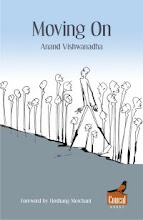
- Hello and welcome! I am someone who is passionate about poetry and motorcycling and I read and write a lot (writing, for me has been a calling, a release and a career). My debut collection of English poems, "Moving On" was published by Coucal Books in December 2009. It can be ordered here My second poetry collection, Ink Dries can be ordered here Leave a comment or do write to me at ahighwayman(at)gmail(dot)com.
Take A Look See
-
-
-
Meet Annie the author10 years ago
-
Poems online5 years ago
-
-
-
-
When to have THE TALK with the kids1 year ago
-
An Analysis of Trump9 years ago
-
-
-
Where journeys end9 months ago
-
-
-
-
-
Indian in Space: A phony Socialist trick14 years ago
-
Recipe – Easy Apple Halwa5 years ago


